Aug 24, 2026 | Uncategorized
Choosing the best bank for a home loan can save an Indian homebuyer lakhs of rupees over a 15- to 30-year repayment period. But the right lender is not necessarily the bank advertising the lowest starting interest rate. In August 2026, rates vary considerably based on credit score, income, employment, and loan size. Buyers should compare interest rates, processing costs, repayment flexibility, service, and eligibility before making a decision.
What Makes the Best Bank for a Home Loan in 2026?
The housing finance market is highly competitive. Some public-sector banks are currently advertising home loans beginning around 7%, while large private-sector lenders offer their own combinations of pricing, faster digital processes, and relationship-based services.
This creates an interesting problem for borrowers.
A bank offering the lowest advertised rate may not provide you with its lowest rate. Risk-based pricing means that your credit score, income stability, profession, existing debts, loan amount, and other characteristics can influence the final quotation.
Therefore, identifying the best bank for a home loan requires comparing the actual offer available to you rather than choosing solely from advertisements.
A good home-loan comparison should consider interest rate, processing and administrative costs, benchmark structure, prepayment flexibility, maximum tenure, customer service, and the lender’s ability to process your particular property.
Best Bank for Home Loan: Compare the Total Cost, Not Just the Rate
Imagine Bank A offers you 7.20% while Bank B offers 7.35%.
Bank A initially seems like the obvious winner.
But what if Bank A has substantially higher upfront charges or its loan structure is unsuitable for your requirements? What if Bank B provides a better overdraft facility that allows you to reduce interest by keeping surplus funds against the loan?
The best bank for a home loan should therefore be selected according to your total borrowing requirements.
For most buyers, interest will remain the highest cost. But once competing lenders quote similar rates, fees, convenience and flexibility can become deciding factors.
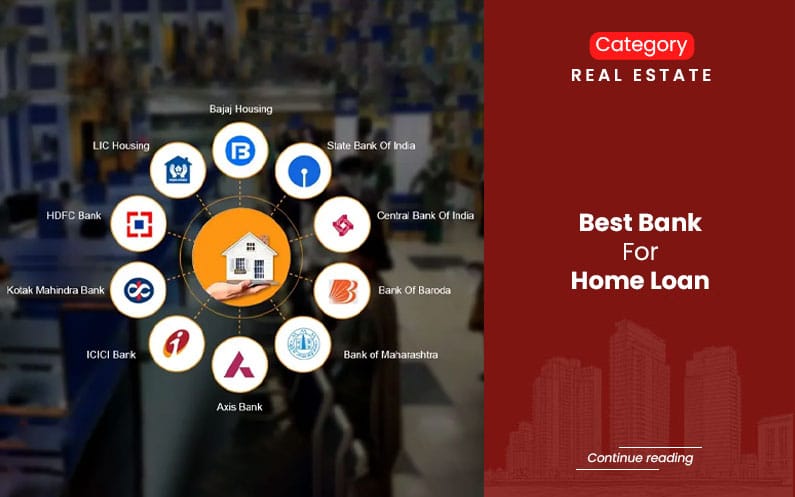
Top 10 Banks for Home Loans in India: 2026 Comparison
The following top 10 banks for home loans in India provide a useful starting shortlist. This is not a ranking from universally “best” to “worst” because the final loan available to each borrower will differ.
Recent August 2026 market comparisons show several PSU banks clustered near the lowest end of current housing-loan rates.
| Bank |
Indicative Starting Home Loan Rate* |
Why Buyers May Consider It |
| Bank of Maharashtra |
Around 7.00% |
Very competitive headline pricing |
| Bank of India |
Around 7.10% |
Competitive PSU option |
| Union Bank of India |
Around 7.15% |
Large PSU branch network |
| Bank of Baroda |
Around 7.20% |
Competitive housing-loan range |
| Punjab National Bank |
Around 7.25% |
Major PSU lender |
| State Bank of India |
Around 7.25% |
Large network and established housing-loan business |
| Kotak Mahindra Bank |
Around 7.60% |
Private-bank alternative |
| HDFC Bank |
Around 7.75% |
Large housing-finance ecosystem |
| IDFC FIRST Bank |
Around 7.75% |
Private-sector alternative |
| Axis Bank |
Around 8.00% |
Major private-sector lender |
Indicative starting rates based on August 2026 market information. Rates can change, and the actual offer depends on borrower and loan characteristics.
This home loan bank list should be used to create a shortlist rather than automatically selecting the bank at the top.
1. State Bank of India: A Strong All-Round Contender
SBI naturally enters any discussion about the best bank for a home loan because of its scale, branch network, and established presence in housing finance.
Recent August 2026 comparisons place SBI’s starting housing-loan rate at approximately 7.25%, although the final applicable rate depends on the borrower’s profile.
SBI can be particularly attractive to buyers who value a large physical branch network and prefer dealing with a major public-sector lender.
For someone purchasing a house outside a major metropolitan area, branch accessibility can be important. Home loans involve property documentation, legal verification, disbursement, and servicing over many years.
However, do not choose SBI solely because of its size.
Request a personalised rate and compare it with at least two or three competing lenders.
2. Bank of Maharashtra: Worth Checking for Low Rates
Bank of Maharashtra deserves attention from rate-sensitive borrowers.
Recent August 2026 comparisons place its housing-loan rates at approximately 7.00% at the lowest advertised end, making it one of the most competitive headline offers currently reported.
Does that automatically make it the best bank for a home loan?
No.
The lowest rate is available only when the applicant satisfies the relevant eligibility and pricing criteria. Branch accessibility, processing experience, and the final rate offered for your specific profile should also be evaluated.
Nevertheless, if your priority is securing the lowest possible borrowing cost, Bank of Maharashtra belongs on your comparison list.
3. Bank of India: Another Competitive PSU Option
Bank of India is another public-sector lender worth considering when looking for the best home loan in India.
Recent August 2026 comparisons indicate rates beginning around 7.10%, although actual pricing varies.
A borrower with a strong credit profile should obtain a personalised quotation rather than relying on the advertised minimum.
This principle applies throughout the market.
A bank with a 7.10% starting rate might offer one applicant 7.30% and another a materially higher rate. Your objective is not to identify India’s theoretical minimum rate but the lowest suitable rate actually available to you.
4. Bank of Baroda: A Major PSU Alternative
Bank of Baroda is another prominent name among top home loan banks.
Recent comparisons place its starting housing-loan pricing at approximately 7.20%, although rates vary according to borrower characteristics and lending terms.
It is worth comparing Bank of Baroda directly with SBI, PNB, Bank of India, and other PSU lenders if you have a strong credit profile.
A difference of even 0.10%–0.25% can become meaningful when applied to ₹40 lakh, ₹60 lakh,h or ₹1 crore for two decades.
This is why the best bank for a home loan cannot be selected casually.
5. Punjab National Bank: Another Bank to Shortlist
Punjab National Bank remains another significant public-sector option.
August 2026 comparisons indicate starting rates around 7.25%, with the applicable range extending higher depending on the loan and applicant.
PNB may therefore deserve consideration alongside other PSU lenders when evaluating the best bank for a housing loan.
Rather than applying simultaneously everywhere, borrowers can first compare published rates and eligibility conditions before seeking quotations from a smaller shortlist.
This reduces unnecessary applications while still creating sufficient competition to negotiate.
6. Union Bank of India: Competitive Starting Pricing
Union Bank of India also appears near the competitive end of recent housing-loan comparisons, with rates reported from around 7.15%.
That makes it another potential candidate for borrowers primarily concerned with interest cost.
However, the same warning applies: starting rates are not guaranteed rates.
When evaluating the best bank for a home loan, ask Union Bank and competing lenders for the final rate based on your credit score, loan requirement, and employment category.
The written quotation is more useful than a promotional banner.
7. HDFC Bank: A Major Private-Sector Home Loan Provider
HDFC Bank remains an important consideration for buyers searching for the best home loan provider in India.
Its official current home-loan information shows rates benchmarked to the policy repo rate. The published special housing-loan range currently starts at approximately 7.75% and can extend considerably higher depending on the applicant’s profile.
HDFC Bank explicitly notes that factors such as credit profile, income, loan amount, and employment category influence pricing.
Therefore, comparing HDFC with PSU lenders is not simply a question of 7.75% versus 7.20%.
An existing customer, high-income applicant, or borrower with a particular property and service requirement may still find the overall HDFC proposition attractive.
8. ICICI Bank: Useful for Digital and Existing-Bank Customers
ICICI Bank should also be considered by buyers evaluating major private-sector lenders.
Its current official page advertises pre-approved digital home loans starting at 7.50% for qualifying customers, while its broader rate card varies according to credit score, employment, and loan amount.
ICICI also publishes a processing fee of 0.5% of the loan amount plus applicable taxes for its standard offering.
This demonstrates why finding the best bank for a home loan requires careful reading.
The eye-catching 7.50% figure applies to a particular pre-approved digital proposition and should not automatically be treated as the standard rate every new applicant will receive.
Existing ICICI customers should check whether they have a pre-approved offer before comparing it with competing banks.
9. Kotak Mahindra Bank: Another Private-Sector Choice
Kotak Mahindra Bank appears in current market comparisons with housing-loan rates beginning at approximately 7.60%, subject to eligibility.
It may therefore be worth including when comparing best home loans from private banks.
Private-sector lenders can appeal to borrowers looking for efficient digital processes, relationship banking or specific service preferences.
Nevertheless, convenience should be assigned a financial value.
If one lender offers dramatically faster processing but charges you a materially higher rate over 20 years, calculate how much that convenience ultimately costs before deciding.
10. Axis Bank: Consider the Complete Offer
Axis Bank completes our core list of major banking options.
Recent August 2026 comparisons place its housing-loan rates at approximately 8.00%, although final pricing depends on borrower characteristics.
Axis may not currently advertise the lowest headline rate among this particular group, but that does not automatically remove it from consideration.
Banking relationships, customised offers and applicant-specific pricing can change the equation.
If you already have a strong relationship with Axis, request a personalised quotation before making a decision.
The best bank for a home loan is determined by the actual offer—not a generic ranking.
Which Bank Is Good for Home Loan for Salaried Buyers?
If you are asking which bank is good for a home loan as a salaried borrower, begin with lenders offering competitive rates for strong credit profiles.
Stable salaried employment can make underwriting relatively straightforward because income can generally be established using salary slips, bank statements, Form 16, and income-tax records.
A salaried borrower with a strong credit score should compare at least a few PSU and private-sector lenders.
For example, you might obtain quotations from SBI or another competitive PSU lender, HDFC Bank, and ICICI Bank.
Then compare them side by side.
The best bank for a home loan may become obvious only after each lender assesses your profile.
Which Bank Is Better for Self-Employed Buyers?
Self-employed applicants can require a different approach.
Banks typically examine income-tax returns, business financials, banking patterns, business continuity, and existing obligations before determining eligibility.
Some borrowers may find that a lender willing to understand their business cash flows sanctions a larger or more suitable loan even if another bank advertises a lower headline rate.
Therefore, self-employed buyers should not focus exclusively on the lowest home loan available in advertisements.
The best housing finance arrangement is one that accurately assesses sustainable income without forcing the borrower into an unaffordable EMI.
How Much Can Choosing the Right Bank Actually Save?
Consider a ₹50 lakh housing loan over 20 years.
| Interest Rate |
Approx. EMI |
Approx. Total Interest |
| 7.00% |
₹38,765 |
₹43.04 lakh |
| 7.25% |
₹39,519 |
₹44.85 lakh |
| 7.50% |
₹40,280 |
₹46.67 lakh |
| 8.00% |
₹41,822 |
₹50.37 lakh |
| 8.50% |
₹43,391 |
₹54.14 lakh |
| 9.00% |
₹44,986 |
₹57.97 lakh |
Illustrative calculations assume the rate remains unchanged for the entire 20-year tenure. Actual floating-rate loans can change.
The difference between 7.25% and 8.50% is approximately ₹3,872 per month.
Over 20 years, the difference in total interest in this illustration exceeds ₹9 lakh.
That explains why researching the best bank for a home loan is worth several days of comparison before committing to decades of repayment.
Which Home Loan Is Better in India: Fixed or Floating?
The question of which home loan is better in India also involves choosing the interest-rate structure.
Floating-rate loans change according to their applicable benchmark and reset mechanism. They can become cheaper when benchmark rates decline but can also become more expensive when rates rise.
Fixed-rate loans provide greater predictability for the fixed period but may carry different pricing.
Hybrid products combine both structures. Recent developments in 2026 have also highlighted hybrid products that fix the rate initially before switching to floating pricing.
When selecting the best bank for a home loan, ask whether the quoted rate is floating, fixed, or hybrid,d and how future resets work.
Comparing 7.5% floating with 8% fixed without understanding the structure is not an apples-to-apples comparison.
Does Your CIBIL Score Change Which Bank Is Best?
Absolutely.
Credit score can materially influence both eligibility and interest pricing. Current lender information explicitly identifies credit or bureau score as an important pricing factor.
Someone with a strong repayment record can potentially access more competitive offers and negotiate from a stronger position.
Before applying, check your credit report for inaccuracies. Pay outstanding credit-card bills on time, avoid unnecessary unsecured borrowing,g and keep overall debt manageable.
Improving your financial profile can change which lender becomes the best bank for a home loan for you.
Home Loan Bank List: What Should You Compare?
A useful home loan bank list should contain more than bank names.
Create your own comparison using actual quotations:
| Factor |
Bank 1 |
Bank 2 |
Bank 3 |
| Final interest rate offered |
___ |
___ |
___ |
| Floating/fixed/hybrid |
___ |
___ |
___ |
| Benchmark |
___ |
___ |
___ |
| Processing charges |
___ |
___ |
___ |
| Other upfront charges |
___ |
___ |
___ |
| EMI |
___ |
___ |
___ |
| Maximum tenure |
___ |
___ |
___ |
| Prepayment flexibility |
___ |
___ |
___ |
| Digital servicing |
___ |
___ |
___ |
| Branch accessibility |
___ |
___ |
___ |
This gives you a much stronger basis for selecting the best bank for a home loan than simply comparing advertisements.
Should You Choose a Bank or Housing Finance Company?
Banks are not the only institutions providing housing finance.
Housing finance companies also compete for borrowers, and the best housing finance option may occasionally come from an HFC rather than a traditional bank.
Eligibility assessment, interest-rate structure, and service can differ.
This can be particularly relevant for applicants with income profiles that do not fit conventional salaried underwriting neatly.
However, borrowers should compare the effective cost and contractual terms carefully regardless of lender type.
The goal is not to borrow from a bank simply because it is a bank. The goal is to obtain a suitable, transparent, and affordable housing loan.
Never Choose a Home Loan Based Only on Processing Speed
Property transactions can create urgency.
A developer may request payment within a deadline, or a seller may want quick confirmation. Under pressure, borrowers sometimes accept the first bank that sanctions the loan.
That can become expensive.
A home loan may continue for two decades after the urgency surrounding the property purchase has disappeared.
Give yourself sufficient time to compare top home loan banks before the payment deadline.
A few additional days spent finding the best bank for a home loan can potentially save several lakhs over the lifetime of the loan.
Can You Change Banks Later?
Yes, eligible borrowers can explore a home-loan balance transfer when another lender offers materially better terms.
But transferring is not automatically profitable.
Consider the outstanding principal, remaining tenure, new interest rate, processing expenses, and other transfer-related costs.
If only a few years remain on the loan, the savings may be too small to justify the effort and charges.
Before transferring, also ask your existing lender whether it can reduce or reprice your current rate.
The existence of balance transfers should not be an excuse to choose carelessly initially. Finding the best bank for a home loan at the beginning remains preferable.
Final Verdict: Which Is the Best Bank for Home Loan in India?
There is no single best bank for a home loan for every Indian borrower.
As of August 2026, recent comparisons show some public-sector banks advertising rates around 7%–7.25% at the lowest end, making lenders such as Bank of Maharashtra, Bank of India, Union Bank, Bank of Baroda, SBI and PNB worth examining for rate-conscious borrowers.
Major private-sector lenders such as HDFC Bank and ICICI Bank should also be compared, particularly when service, digital processing, existing relationships, or personalised offers matter. Their official information confirms that final rates can vary substantially according to borrower profiles.
So, if you are wondering which bank is good for a home loan, do not search for one universal winner.
Shortlist three to five lenders. Obtain personalised quotations. Compare interest rates, processing fees, benchmark structures, tenure and flexibility. Calculate the total interest payable, not merely the first EMI.
A home is likely to be one of the largest purchases you ever make. Choosing the best bank for a home loan should receive the same careful comparison as choosing the property itself.
Interest rates and product conditions referenced here reflect information available in August 2026 and can change. Verify the latest applicable rate and charges directly with the lender before applying.

Aug 24, 2026 | Uncategorized
The best home loan interest rates in India are currently starting at around 7% per annum in August 2026, but the lowest advertised rate is not necessarily the rate you will receive. Your credit score, income, employment profile, loan amount, and property can change the final offer significantly. For a loan lasting 15–30 years, even a 0.25% difference can translate into lakhs of rupees, making comparison essential before choosing a lender.
Best Home Loan Interest Rates in India: August 2026 Comparison
The lending environment has changed considerably following reductions in benchmark rates. As of August 2026, some public-sector banks are advertising housing loans starting around 7%–7.25%, although these headline rates are normally reserved for borrowers meeting the lender’s strongest eligibility criteria.
Recent market data published on August 20, 2026 indicates that housing-loan rates can start at approximately 7%. Bank of Maharashtra and Central Bank of India are among lenders appearing at the lower end of the market, while other major public-sector banks also offer competitive starting rates.
Here is an indicative comparison of some of the best home loan interest rates in India based on rates reported during August 2026:
| Bank |
Indicative Starting Rate in August 2026 |
| Bank of Maharashtra |
Around 7.00% p.a. |
| Central Bank of India |
Around 7.00% p.a. |
| Bank of India |
Around 7.10% p.a. |
| Canara Bank |
Around 7.15% p.a. |
| Union Bank of India |
Around 7.15% p.a. |
| Bank of Baroda |
Around 7.20% p.a. |
| Punjab National Bank |
Around 7.20%–7.25% p.a. |
| State Bank of India |
Around 7.25% p.a. |
| Kotak Mahindra Bank |
Around 7.60% p.a. |
| HDFC Bank |
Published range around 7.75%–13.20% p.a. |
These figures are indicative rather than guaranteed offers. Recent comparisons show some differences between published rate cards and aggregator data, which is exactly why borrowers should obtain personalised quotations before deciding. HDFC Bank, for example, currently publishes rates linked to the policy repo rate, with its website showing a broad range starting at approximately 7.75%.
Best Home Loan Interest Rates Are Not Available to Everyone
A bank advertising 7% does not mean every applicant receives a home loan interest rate of 7%.
Lenders use risk-based pricing. A salaried applicant with an excellent credit score, stable employment, low existing debt, and a substantial down payment may receive a significantly better quotation than someone with a weaker credit profile.
This is one of the most important things to understand when comparing the best home loan interest rates.
Recent lending information confirms that credit score, income, employment profile, loan amount,t and existing financial obligations can affect the final interest rate.
Instead of asking a bank only, “What is your home loan rate?”, ask:
“What is the final rate applicable to my profile, and what benchmark and spread determine it?”
That question produces a much more useful comparison.
Which Bank Currently Has the Lowest Housing Loan Interest Rate?
As of the third week of August 2026, recent market comparisons place some public-sector banks at approximately 7% at the lowest end of advertised housing-loan pricing.
Therefore, someone searching for the lowest housing loan interest rate should certainly compare public-sector banks rather than limiting the search to the largest private lenders.
But “lowest” requires qualification.
A lender advertising 7% may offer you 7.60%, while another advertising rates starting at 7.25% could offer you 7.35% based on your profile.
The second lender would then be cheaper for you.
That is why the best home loan interest rates should be compared using written or formally generated personalised quotations rather than advertising alone.
Why Does a 0.25% Interest Difference Matter So Much?
Housing loans are unusually sensitive to small interest-rate differences because both the principal and tenure are large.
Consider a ₹50 lakh housing loan repaid over 20 years.
| Interest Rate |
Approx. Monthly EMI |
Approx. Total Interest |
Approx. Total Repayment |
| 7.00% |
₹38,765 |
₹43.04 lakh |
₹93.04 lakh |
| 7.25% |
₹39,519 |
₹44.85 lakh |
₹94.85 lakh |
| 7.50% |
₹40,280 |
₹46.67 lakh |
₹96.67 lakh |
| 7.75% |
₹41,047 |
₹48.51 lakh |
₹98.51 lakh |
| 8.00% |
₹41,822 |
₹50.37 lakh |
₹1.004 crore |
| 8.50% |
₹43,391 |
₹54.14 lakh |
₹1.041 crore |
| 9.00% |
₹44,986 |
₹57.97 lakh |
₹1.080 crore |
Illustrative calculations for a ₹50 lakh loan over 240 monthly instalments, assuming the stated rate remains unchanged throughout. Actual floating-rate loans can change over time.
The numbers demonstrate why finding the best home loan interest rates deserves more attention than simply negotiating a processing fee.
Moving from 8% to 7% saves approximately ₹3,057 every month in this example. Over 20 years, assuming unchanged rates, the difference in total interest is approximately ₹7.33 lakh.
That is substantial money for a seemingly small 1 percentage-point difference.
What Are the Current Home Loan Interest Rates?
The current home loan interest rates available to Indian borrowers in August 2026 broadly begin around 7% at the lowest advertised end, while actual rates can extend considerably higher depending on lender and borrower profile.
For example, HDFC Bank’s current published information shows home-loan pricing benchmarked to the policy repo rate, with a broad applicable range. Its published information also makes clear that the final pricing depends on factors such as credit profile, income, loan amount, and employment category.
This means home loan rates in India should never be treated as one standard market number.
Two people purchasing identical ₹60 lakh apartments could receive different interest-rate offers from the same bank.
Your personal financial profile matters.
Home Loan Interest Rates Today vs the Rate You Actually Receive
People searching for home loan interest rates today usually encounter “starting from” rates.
This is useful for creating a shortlist but insufficient for selecting the lender.
Suppose Bank A advertises 7.00%, Bank B advertises 7.20%, and Bank C advertises 7.25%. You might naturally assume Bank A is cheapest.
After assessment, however, your quotations could look like this:
| Lender |
Advertised Starting Rate |
Hypothetical Rate Offered to You |
| Bank A |
7.00% |
7.65% |
| Bank B |
7.20% |
7.40% |
| Bank C |
7.25% |
7.35% |
In this hypothetical case, Bank C provides the best home loan interest rates for your profile despite having the highest starting rate of the three.
This is why comparison should occur after preliminary eligibility assessment whenever possible.
Which Bank Provides Lowest Interest on Home Loan?
If your question is which bank provides the lowest interest on a home loan, the current market data points towards a group of public-sector lenders competing aggressively at the lower end.
As of August 19–20, 2026, recent comparisons report starting rates around 7% for some lenders, with several other PSU banks clustered around 7.10%–7.45%.
However, there is no permanently correct answer.
Rates change. Promotional offers expire. Repo-linked rates can move. Banks can alter their spreads and risk-based pricing.
Your credit score can also place you in a different pricing bracket.
Therefore, the bank offering the lowest home loan rates nationally may not necessarily provide the lowest rate to you personally.
Is the Lowest Home Loan Always the Best Home Loan?
No.
Finding the lowest home loan cost involves considerably more than comparing interest rates.
Processing fees, legal-verification charges, valuation costs, administrative charges, insurance bundling, prepayment flexibility, loan-service quality, and benchmark structure can all affect the experience and overall cost.
Suppose Lender A offers 7.20% and Lender B offers 7.30%.
At first glance, Lender A wins.
But if Lender A imposes substantially higher upfront costs, or the product has conditions unsuitable for your circumstances, the difference becomes less straightforward.
When searching for the best home loan interest rates, request a complete written schedule of charges.
Compare the effective borrowing arrangement, not one number on an advertisement.
What Determines Your Home Loan Interest Rate?
Your home loan interest rate is largely determined by how risky the lender believes the loan will be.
Credit history is particularly important. A strong credit score and consistent repayment history indicate lower credit risk and can improve your ability to negotiate.
Income stability matters as well. Banks examine salary or business income, employment history, and existing liabilities to estimate whether you can comfortably service the proposed EMI.
Loan-to-value ratio also matters. If you contribute a larger down payment, the bank finances a smaller percentage of the property’s value, potentially reducing its exposure.
Loan amount, borrower age, employment category, and property characteristics can also influence pricing.
The best home loan interest rates therefore tend to go to borrowers presenting the strongest combination of creditworthiness and repayment capability.
What Credit Score Do You Need for the Lowest Home Loan Rates?
There is no single credit-score threshold guaranteeing the lowest home loan rates across every Indian bank.
Nevertheless, higher scores generally strengthen your position.
Someone with a CIBIL score around 780–800 or above, stable income, and limited existing debt is generally better positioned to negotiate than someone with a significantly weaker score. Banks can have different score bands and underwriting rules.
If your property purchase is six months away, checking your credit report early can be worthwhile.
Correct genuine reporting errors, avoid missing EMI or credit-card payments, control unsecured debt, and avoid unnecessarily applying for several new loans immediately before seeking housing finance.
Improving your credit profile before applying can sometimes save far more than negotiating small administrative charges.
Fixed vs Floating: Which Gives the Best Home Loan Interest Rates?
Most borrowers comparing the best home loan interest rates will encounter floating, fixed or occasionally hybrid structures.
A floating-rate loan can change when its applicable benchmark changes. This means the borrower can benefit when benchmark rates decline but may pay more when they rise.
Fixed-rate loans provide greater payment predictability, although their pricing and conditions may differ.
Hybrid loans can offer a fixed rate for an initial period before transitioning to floating pricing.
Do not assume the lowest initial number automatically represents the cheapest structure over 20 years.
Understand the benchmark, spread, reset fr,equency and conversion conditions before signing.
How Repo Rate Changes Can Affect Home Loan Rates in India
Many floating-rate retail loans are connected directly or indirectly to external benchmarks.
When the policy environment changes, home loan rates in India can consequently move, although the exact timing and magnitude depend on the loan’s benchmark and contractual reset mechanism.
This is why existing borrowers should periodically review their loan rather than assuming the rate sanctioned five years ago remains competitive.
Recent August 2026 lending developments also show that different banks can move lending benchmarks in different directions or by different amounts.
If your existing rate is substantially above the best home loan interest rates available for a borrower with your profile, speak with your existing lender about repricing before automatically transferring the loan elsewhere.
Best Bank for Home Loan: Rate Is Only One Part of the Decision
There is no universal best bank for a home loan because borrowers have different priorities.
A first-time salaried buyer may prioritise the lowest possible floating rate. A self-employed business owner may value a lender capable of assessing irregular income properly. Someone buying an under-construction property may prioritise a lender already familiar with the project.
Another borrower may want an overdraft-linked housing loan because they regularly maintain surplus cash.
Therefore, identify your needs first.
Then compare the best home loan interest rates, processing costs, loan tenure, service standards, digital access, and prepayment flexibility.
The best bank is ultimately the lender providing the most suitable total package for your specific financial profile.
Should You Choose a 20-Year or 30-Year Home Loan?
A longer tenure reduces the monthly EMI but can dramatically increase total interest.
For example, extending repayment gives each EMI more time to spread the principal, improving immediate affordability. But interest continues accruing for additional years.
The smartest strategy for some borrowers is to select an EMI that provides sufficient monthly breathing room while making voluntary prepayments whenever income allows.
When comparing the best home loan interest rates, calculate both EMI and total interest for several tenure combinations.
A low interest rate combined with unnecessarily long repayment can still result in an expensive loan.
How to Negotiate for a Better Home Loan Rate
Do not assume the first rate quoted by a lender is necessarily the final rate available.
Start by obtaining offers from multiple lenders. A competing sanction or quotation can strengthen your negotiating position.
Maintain a strong credit profile and highlight stable income, a lower loan-to-value requirement and existing banking relationships where relevant.
Ask whether preferential pricing is available for particular borrower categories.
Most importantly, negotiate the spread, not merely the headline benchmark.
If the benchmark changes for everybody while your spread remains comparatively high, your loan can remain expensive.
Finding the best home loan interest rates is partly about market research and partly about presenting yourself as a low-risk borrower.
A Practical Comparison Before You Sign
Before choosing between lenders, create a simple comparison like this:
| Factor |
Bank A |
Bank B |
Bank C |
| Final offered rate |
___ |
___ |
___ |
| Benchmark |
___ |
___ |
___ |
| Spread |
___ |
___ |
___ |
| Monthly EMI |
___ |
___ |
___ |
| Processing fee |
___ |
___ |
___ |
| Other upfront charges |
___ |
___ |
___ |
| Maximum tenure |
___ |
___ |
___ |
| Prepayment conditions |
___ |
___ |
___ |
| Rate reset frequency |
___ |
___ |
___ |
This approach makes comparing the best home loan interest rates far more reliable than choosing a lender from a “starting at” advertisement.
Final Thoughts: Finding the Best Home Loan Interest Rates in 2026
The best home loan interest rates in India in August 2026 are highly competitive, with recent market comparisons showing headline rates beginning at around 7% for some lenders. Several large public-sector banks currently sit near the lower end, while private banks remain competitive depending on the borrower’s profile and product requirements.
But the lowest advertised rate should only be your starting point.
Request personalised quotations from at least three to five lenders. Compare the final interest rate, benchmark, spread, processing charges, and prepayment conditions. Then calculate the EMI and total interest over your intended tenure.
For a ₹50 lakh loan over 20 years, our illustration shows that moving from 8% to 7% can reduce total interest by more than ₹7 lakh if rates remained unchanged. That makes a proper comparison worthwhile.
Most importantly, remember that the best home loan interest rates are not simply the lowest numbers appearing online. The best rate is the lowest sustainable borrowing cost that you actually qualify for, from a lender and loan structure that suit your property purchase and long-term financial position.
Rate data in this article reflects information available in August 2026 and can change without notice. Borrowers should verify the applicable rate directly with the lender immediately before applying.

Aug 24, 2026 | Uncategorized
How to apply for a home loan subsidy in 2026 is an important question for Indian families planning to purchase or construct their first permanent home. Much of the information online still refers to the older PMAY-Urban Credit Linked Subsidy Scheme and the widely advertised ₹2.67 lakh figure. However, the current framework is different. Buyers should understand PMAY-U 2.0, its Interest Subsidy Scheme, eligibility rules, and application process before calculating any government assistance into their home-buying budget.
How to Apply for Home Loan Subsidy Under PMAY-U 2.0
The first thing a homebuyer needs to understand is that a home loan subsidy is not automatically available to everyone who takes a housing loan.
As of August 2026, urban homebuyers looking for central government housing assistance need to examine the Pradhan Mantri Awas Yojana-Urban 2.0 framework, commonly called PMAY-U 2.0. The scheme is intended to support eligible urban families belonging to the Economically Weaker Section, Low Income Group, and Middle Income Group categories in constructing, purchasing,g or renting an affordable house through its different verticals.
For homebuyers using housing finance, the Interest Subsidy Scheme, or ISS, is particularly relevant.
Understanding how to apply for home loan subsidy therefore begins with checking whether your household, property, loan amount,nt and income satisfy the applicable PMAY-U 2.0 requirements.
How to Apply for Home Loan Subsidy After Checking Your Eligibility
Before filling out an application, determine whether your household falls within the eligible income category and whether anyone in your family already owns a pucca house.
Under PMAY-U 2.0, a beneficiary family generally consists of a husband, wife, and unmarried children. Eligible families should not own a pucca house anywhere in India, subject to the scheme’s detailed guidelines.
For the Interest Subsidy Scheme, the annual household income ceiling extends up to ₹9 lakh. The scheme also specifies limits concerning the eligible housing loan and property value.
This is why how to apply for home loan subsidy cannot be answered only by providing an online application link. Eligibility needs to be established before expecting the subsidy.
What Is the PMAY Scheme in 2026?
The PMAY scheme is the Pradhan Mantri Awas Yojana, the Government of India’s flagship housing initiative. For urban areas, PMAY-U 2.0 was launched to support eligible families through different housing-assistance mechanisms.
The mission period covers five years from 2024, making it directly relevant to homebuyers researching housing support in 2026.
PMAY-U 2.0 operates through four verticals: Beneficiary-Led Construction, Affordable Housing in Partnership, Affordable Rental Housing, and the Interest Subsidy Scheme.
For someone researching how to apply for a home loan subsidy while purchasing a house using bank finance, the Interest Subsidy Scheme is the component that deserves particular attention.
It is important not to confuse PMAY-U 2.0 with older PMAY provisions that appear in articles, videos, and advertisements published several years ago.
Is the ₹2.67 Lakh Subsidy on Home Loan Still Available?
The 2.67 lakh subsidy on home loan is one of the most persistent figures appearing in searches about PMAY.
That amount became widely associated with the earlier Credit Linked Subsidy Scheme under the original PMAY-Urban framework. It should not automatically be presented as the subsidy available to a new applicant in August 2026.
Under PMAY-U 2.0’s Interest Subsidy Scheme, eligible beneficiaries can receive an interest subsidy calculated on the first ₹8 lakh of a qualifying housing loan at 4% per annum for a tenure of up to 12 years. The maximum actual subsidy release is ₹1.80 lakh per eligible beneficiary, subject to the scheme conditions.
Therefore, anyone investigating how to apply for home loan subsidy in 2026 should avoid building their property budget around an assumed ₹2.67 lakh benefit.
Always use the rules applicable to the current scheme rather than an older headline.
PM Home Loan Yojana: Understanding What Buyers Are Searching For
People often use the phrase pm home loan yojana while looking for government assistance to purchase a house.
In practice, buyers should identify the official housing programme behind the search term rather than assuming there is a universal government loan that directly finances every home purchase.
PMAY-U 2.0 can provide housing assistance to qualifying urban beneficiaries, while housing loans themselves are ordinarily sanctioned by banks, housing finance companies and other participating financial institutions according to their lending criteria.
This distinction is central to understanding how to apply for a home loan subsidy.
Government assistance does not remove the lender’s responsibility to assess your income, creditworthiness, repayment capacity, property documentation, and other lending requirements.
You need to satisfy both the housing-scheme rules and the lender’s loan requirements where applicable.
PM Awas Yojana Eligibility: Who Can Qualify?
Understanding PMAY eligibility should be the first practical step before submitting an application.
Under PMAY-U 2.0, eligible urban families from EWS, LIG, and MIG categories that do not have a pucca house anywhere in the country can potentially receive assistance according to the applicable vertical and conditions.
Income categories are defined by annual household income. Under the broader PMAY-U 2.0 framework, EWS households have annual income up to ₹3 lakh, LIG households from ₹3 lakh to ₹6 lakh, and MIG households from ₹6 lakh to ₹9 lakh.
For buyers specifically researching how to apply for home loan subsidy under ISS, additional financial limits apply.
The Interest Subsidy Scheme covers eligible households with annual income up to ₹9 lakh, housing loans up to ₹25 lakh,h and property value up to ₹35 lakh, subject to the complete scheme guidelines.
These thresholds make accurate budgeting essential before selecting a property.
How Does the Pradhan Mantri Awas Yojana Home Loan Subsidy Work?
The Pradhan Mantri Awas Yojana home loan subsidy under PMAY-U 2.0 is structured as an interest subsidy rather than a simple unrestricted cash payment handed to the buyer.
Under ISS, eligible home loans sanctioned and disbursed on or after 1 September 2024 can potentially qualify, subject to the scheme requirements.
The subsidy applies at 4% on the first ₹8 lakh of the eligible housing loan for a maximum tenure of 12 years. The maximum subsidy that can actually be released is ₹1.80 lakh.
This information is particularly important when learning how to apply for a home loan subsidy, because a buyer should not interpret the programme as the government paying a fixed percentage of the property’s purchase price.
The benefit is connected to eligible housing finance and is governed by specific limits and disbursement conditions.
How Is the PMAY Subsidy Paid?
The PMAY subsidy under the current Interest Subsidy Scheme is structured to be released in instalments, subject to compliance with the applicable requirements.
Under PMAY-U 2.0 guidelines, the subsidy can be released in five yearly instalments. The beneficiary must satisfy the scheme conditions, including the status of the loan account.
This means buyers should not necessarily expect the entire eligible benefit to appear immediately after purchasing the property.
When researching how to apply for a home loan subsidy, understand both eligibility and disbursement.
A household may technically fall within the prescribed income category, but the property value, loan amount, previous housing assistance, ownership position, or loan performance can affect qualification or continued receipt of the benefit.
Ask the participating lender how the subsidy is reflected against your housing loan and retain all relevant documentation.
Step-by-Step Process to Apply for the Subsidy
Once you have established basic eligibility, the application process can be approached systematically.
Start by confirming that your household meets PMAY-U 2.0 requirements and identifying the appropriate scheme vertical. For a financed urban home purchase, determine whether the Interest Subsidy Scheme applies to your circumstances.
Applicants can use the official PMAY-U 2.0 platform and the prescribed application mechanism. Information generally required includes Aadhaar details, household information, income information, bank details, and information relating to the housing requirement.
The next stage in how to apply for home loan subsidy involves ensuring that the housing loan and property satisfy the ISS conditions. Work with a participating primary lending institution and provide the documents required for both loan underwriting and subsidy processing.
Do not pay an intermediary merely because they claim they can “guarantee” approval. Eligibility and verification ultimately determine the outcome.
Documents You Should Keep Ready
Applicants should organise documentation before beginning the process.
Aadhaar and other required identity details are important for beneficiary verification. Applicants may also need income-related information, bank account details and documentation concerning their household and property.
For a financed purchase, the lender will separately require documents for the housing loan. These can include income evidence, bank statements, property documents, sale-related documents and other records depending on employment and property type.
Understanding how to apply for a home loan subsidy therefore also means preparing for two levels of scrutiny: housing-loan underwriting and government-scheme eligibility.
Keep copies of everything submitted. Ensure names, Aadhaar details, bank information, and property documentation are consistent.
Small discrepancies can create unnecessary delays during verification.
Property Value and Loan Limits Matter
One of the biggest mistakes applicants make is checking only household income.
Under the current ISS framework, the property value can be up to ₹35 lakh, and the housing loan can be up to ₹25 lakh for the applicable subsidy benefit, subject to scheme rules.
Suppose a household earns ₹7 lakh annually but plans to purchase a ₹55 lakh apartment with a ₹40 lakh housing loan. Meeting the income ceiling alone does not mean the transaction automatically qualifies under ISS.
This is an essential part of understanding how to apply for home loan subsidy in 2026.
Before paying a booking amount for a property specifically because you expect government assistance, compare the property’s value and proposed housing loan against the current limits.
A subsidy should be confirmed through eligibility, not assumed during a sales discussion.
What Is the PM Housing Scheme for Urban Homebuyers?
The term pm housing scheme generally refers, in this context, to the government’s Pradhan Mantri Awas Yojana framework.
PMAY-U 2.0 aims to expand affordable housing support for eligible urban households through multiple routes rather than relying exclusively on home-loan subsidies.
For example, one family may need assistance constructing a house on available land, while another may purchase an affordable unit developed through a housing partnership. A third household may need rental housing rather than immediate ownership.
Someone asking how to apply for a home loan subsidy should therefore first determine whether the Interest Subsidy Scheme is actually the most appropriate PMAY-U 2.0 vertical for their situation.
The programme is broader than simply reducing the interest payable on a bank loan.
Can Women Receive Additional Consideration Under PMAY?
Women have an important place within the PMAY housing framework.
Depending on the applicable vertical and scheme requirements, female ownership or joint ownership can form part of the programme’s approach towards improving housing security for women.
However, buyers should avoid interpreting this as an automatic additional cash home loan subsidy available to every female applicant.
Ownership requirements, beneficiary categories and exceptions need to be checked against the relevant PMAY-U 2.0 guidelines.
When learning how to apply for home loan subsidy, couples should therefore consider how the property will legally be owned before completing registration.
The ownership structure should comply with scheme requirements while also accurately reflecting the family’s genuine intentions regarding the property.
What If You Have Already Received Government Housing Assistance?
Previous government housing assistance can affect eligibility.
PMAY-U 2.0 is intended to support qualifying families with genuine housing needs, and applicants need to satisfy conditions concerning previous benefits under housing schemes.
Therefore, someone who has already received a house or housing assistance through specified government programmes should not assume they can apply again simply because they are taking another loan.
This is another reason why applying for home loan subsidy should begin with eligibility verification rather than the application form.
Provide accurate information about previous assistance received by the beneficiary family. Misrepresentation can create problems during verification and potentially affect the benefit later.
Home Loan Subsidy 2025 Information Can Be Outdated in 2026
A search for home loan subsidy 2025 can still return articles and videos that rank prominently in 2026. Some may contain useful information about PMAY-U 2.0, while others may mix the current programme with provisions from the earlier PMAY framework.
Check the publication date and, more importantly, the official scheme rules behind every claim.
This is especially important for figures such as ₹2.67 lakh, income limits, loan limits, and subsidy calculations.
A reliable guide explaining how to apply for home loan subsidy in August 2026 should use the currently applicable PMAY-U 2.0 framework rather than simply recycling an older article with the year changed in its title.
Government programmes evolve. Your financial planning should evolve with them.
Government Home Loan Scheme vs Regular Bank Loan
A government home loan scheme and a regular housing loan are not necessarily competing products.
Under the PMAY-U 2.0 Interest Subsidy Scheme, eligible beneficiaries still obtain housing finance through participating financial institutions. The government assistance operates within the scheme framework while the lender evaluates and services the housing loan.
Your credit profile therefore remains important.
A government subsidy should not be interpreted as guaranteed loan approval for someone who cannot satisfy the lender’s requirements.
When understanding how to apply for a home loan subsidy, calculate the EMI you can comfortably afford even before considering the subsidy.
This provides a safer financial foundation because your home purchase remains dependent primarily on sustainable household income rather than expected government assistance.
Common Mistakes to Avoid While Applying
The first mistake is relying on outdated information about the 2.67 lakh subsidy on a home loan. The current PMAY-U 2.0 ISS framework has different limits and benefit calculations.
The second is assuming that income eligibility alone guarantees approval.
Property value, loan amount, home ownership, previous housing assistance, and other scheme conditions matter.
Another mistake is selecting an expensive property and only later checking PM Awas Yojana eligibility. If receiving government assistance materially affects affordability, eligibility should be investigated before committing financially to the purchase.
Finally, applicants should be cautious about agents promising guaranteed PMAY subsidy approval in exchange for upfront fees.
Use official information and authorised lending channels.
Should You Buy a Property Only Because You Qualify for PMAY?
No housing subsidy should be the sole reason for purchasing a property.
Even if you understand how to apply for home loan subsidy and qualify for assistance, you still need to evaluate the property itself.
Check legal title, statutory approvals, construction quality, neighbourhood infrastructure, water supply, accessibility, maintenance expenses, and future resale potential. For an under-construction project, examine the developer’s track record and applicable RERA information.
Then evaluate the financial side.
Calculate your down payment, registration expenses, EMI, emergency fund, and total interest burden. Consider whether the household can continue paying the loan if income temporarily falls.
The advantages of a home loan subsidy are useful only when attached to an affordable and legally sound property.
Final Thoughts: Apply With Current Information, Not Old PMAY Assumptions
Understanding how to apply for a home loan subsidy in 2026 starts with separating the current PMAY-U 2.0 framework from outdated information about the previous Credit Linked Subsidy Scheme.
For eligible urban households, the Interest Subsidy Scheme can provide meaningful assistance. Under the current framework, qualifying households with annual income up to ₹9 lakh may potentially receive interest subsidy on eligible housing finance, subject to limits including a housing loan of up to ₹25 lakh and a property value of up to ₹35 lakh. The maximum subsidy release under ISS is ₹1.80 lakh, subject to applicable conditions.
Most importantly, do not automatically assume that the older ₹2.67 lakh figure applies to a new 2026 purchase.
Before deciding on a property, verify your eligibility, understand the current PMAY scheme, compare participating lenders, and prepare the necessary documents.
Knowing how to apply for home loan subsidy is valuable, but knowing whether you genuinely qualify is even more important. Treat the subsidy as financial assistance within a larger home-buying decision—not as a reason to stretch your budget or purchase a property you otherwise cannot comfortably afford.

Aug 24, 2026 | Uncategorized
Home loan benefits for women can make property ownership more financially attractive for eligible female borrowers in India. From preferential interest rates offered by some lenders to potential stamp-duty concessions in certain states and access to qualifying government housing support, women may receive advantages when purchasing a home. However, these benefits are not universal. Understanding the conditions behind them is essential before adding a woman as an owner or borrower solely for financial savings.
What Are the Home Loan Benefits for Women in India?
Indian banks, housing finance companies, state governments and housing programmes can treat women homebuyers favourably in different ways. There is no single nationwide package of benefits automatically provided to every woman purchasing a property.
Some lenders offer slightly lower interest rates to eligible women borrowers. Certain states provide lower stamp-duty rates when property is registered in a woman’s name or when she is an eligible co-owner. Government housing schemes may also contain provisions encouraging female ownership.
These home loan benefits for women can produce meaningful savings, particularly when several eligible advantages apply to the same transaction.
However, eligibility remains crucial. A lender can consider income, age, credit history, employment, existing liabilities, property value, and repayment capacity before approving a home loan for women.
Home Loan Benefits for Women Can Extend Beyond the Interest Rate
Many buyers focus entirely on a small interest-rate concession. That can be useful, but it is only one potential advantage.
Property ownership can give women an appreciating financial asset and strengthen long-term household wealth creation. Joint ownership between spouses can also create opportunities for both eligible owners to participate in financing and potentially claim applicable tax deductions according to prevailing income-tax provisions.
Some states may provide stamp-duty concessions for female property owners. Over a large transaction, even a modest percentage difference can translate into substantial savings.
The home loan benefits for women should therefore be considered across the entire transaction rather than only the monthly EMI.
Buyers should compare interest, stamp duty, government support, tax implications, ownership rights, and long-term financial consequences together.
Why Do Banks Offer a Home Loan for Women at Preferential Rates?
A home loan for women may sometimes carry a marginally lower interest rate than the lender’s corresponding rate for other eligible borrowers.
The actual concession differs between lenders and products and can change over time.
Even a small difference deserves attention because housing loans are generally large and long-term. Interest accumulates over many years, so a marginal reduction in the rate can potentially reduce the total interest burden.
This is among the most easily measurable home loan benefits for women.
However, borrowers should compare the final offered rate rather than assuming that a “women’s rate” is automatically the cheapest option in the market. Credit score, loan-to-value ratio, occupation,n and lender-specific pricing can influence the final offer.
Compare multiple lenders using the same loan amount and tenure before deciding.
How Much Can a Lower Interest Rate Actually Save?
Consider why small rate differences matter.
Suppose a household takes a ₹50 lakh housing loan for 20 years. The difference between two relatively close interest rates may appear insignificant when viewed only as a percentage.
Over 240 monthly instalments, however, the cumulative difference can become meaningful.
This demonstrates one of the practical home loan benefits for women when a lender genuinely provides preferential pricing to an eligible female borrower.
But the interest rate should never be examined independently.
Processing fees, legal charges, valuation fees, insurance costs, prepayment conditions, and other charges can affect the overall borrowing cost. A lender offering a slightly lower rate but significantly higher fees may not necessarily provide the best deal.
Ask every lender for a complete cost breakdown.
Home Loan Benefits for Ladies Through Stamp Duty Concessions
The phrase home loan benefits for ladies is often used broadly enough to include property-purchase benefits that technically do not come from the loan itself.
Stamp duty is a good example.
Stamp duty is governed at the state level, and rates and concessions can differ significantly across India. Some states or jurisdictions provide concessional treatment when eligible property is registered in a woman’s name.
If available, this can complement the home loan benefits for women offered by lenders.
For a high-value property, a concession in stamp duty can potentially save more upfront money than a small difference in processing fees.
However, buyers must check the rules applicable in the state where the property is located. Do not rely on stamp-duty rates or concessions applicable in Delhi, Maharashtra, or another state when purchasing property in Assam, Karnataka, or elsewhere.
Property registration is location-specific.
Is There a Special Home Loan Scheme for Ladies?
People frequently search for a home loan scheme for ladies, expecting a single government programme through which every woman can obtain cheaper housing finance.
The reality is more nuanced.
Banks and housing finance companies can offer products or pricing arrangements targeted towards women. Government housing programmes can separately provide financial assistance or ownership preferences to qualifying households.
These programmes should not automatically be treated as interchangeable.
When comparing the home loan benefits for women, determine whether a particular offer is a normal bank housing loan with preferential pricing, a government housing programme, a state-level benefit, or a combination of eligible benefits.
The eligibility conditions can differ significantly.
A product marketed specifically towards women can still require normal credit assessment and proof of repayment capacity.
Is There a Subsidy on Home Loan for Ladies?
A subsidy on a home loan for ladies should not be assumed to be universally available merely because the applicant is female.
Housing subsidies in India are normally connected to specific government schemes and eligibility requirements. Factors can include household income, property ownership, beneficiary category, location, property specifications, and other conditions prescribed under the applicable programme.
Government housing policy has historically encouraged female ownership or co-ownership in certain beneficiary-led programmes.
Therefore, potential home loan benefits for women may become more significant for eligible households purchasing their first home under an applicable housing initiative.
The important word is “eligible.”
Before calculating a subsidy into your home-purchase budget, verify the currently operational scheme, eligibility criteria, and application mechanism through official government or lender channels.
Understanding Female Home Loan Subsidy Claims
Advertisements and social-media posts sometimes use phrases such as female home loan subsidy without explaining which government programme they are referring to.
Buyers should be cautious.
A legitimate subsidy must be connected to a specific scheme with defined eligibility conditions. There is no reason to assume that every woman taking a housing loan automatically receives a fixed subsidy simply because of gender.
When evaluating home loan benefits for women, ask three questions: Which scheme provides the benefit? Am I eligible under its current rules? How and when is the benefit actually delivered?
These questions quickly separate genuine government assistance from vague marketing claims.
If a broker, developer, er or loan agent promises a substantial subsidy, request the official scheme name and verify it independently before relying on the amount while planning your finances.
Can a Housewife Get a Home Loan?
The possibility of obtaining a home loan for housewives depends substantially on repayment capacity and the lender’s underwriting rules.
Being a housewife does not automatically prevent someone from owning property or participating in a housing loan. The financing structure, however, needs to satisfy the lender.
A homemaker without an independent documented income may face difficulty qualifying as the sole borrower for a large housing loan. A working spouse or another eligible earning family member may need to become a co-applicant or co-borrower, depending on the lender’s policy.
The home loan benefits for women can still be relevant where the woman is a genuine owner or co-owner, and the financing structure meets the lender’s requirements.
Ownership should nevertheless be created for genuine legal and financial reasons, not merely as a technical arrangement to obtain a concession.
Should Husband and Wife Take a Joint Home Loan?
Joint borrowing can be useful when both spouses have income and contribute towards purchasing the property.
Combining eligible incomes can potentially increase loan eligibility because the lender evaluates the household’s repayment capability across both borrowers. This can help couples qualify for a property that might otherwise exceed the borrowing capacity of one applicant.
The home loan benefits for women may also be relevant if the female co-owner qualifies for preferential lender pricing or applicable property-registration benefits.
Tax considerations can provide another dimension.
Where both spouses are genuine co-owners, co-borrowers and contribute towards repayment, each may potentially claim applicable housing-loan deductions according to their ownership share, repayment contribution, chosen tax regime and prevailing income-tax provisions.
Joint borrowing should therefore be structured carefully rather than treating the spouse’s name as a formality.
Loans for Ladies in India: Look Beyond Housing Finance
Searches for loans for ladies in India can produce information covering housing loans, personal loans, business finance, microfinance and government-supported entrepreneurship programmes.
These products serve completely different purposes.
Someone purchasing residential property should specifically compare housing finance rather than assuming that a loan marketed for women is suitable for buying a house.
Housing loans are secured against property and generally have longer tenures and different pricing structures from unsecured personal loans.
One of the indirect home loan benefits for women is the growing availability of financial products specifically marketed towards female borrowers, but product suitability still matters more than marketing.
A lower advertised rate is valuable only if the loan amount, tenure, fees, and repayment conditions fit the buyer’s financial situation.
Is There a Loan for Ladies from Government?
The phrase loan for ladies from government can also create confusion.
Government programmes exist in India for housing, entrepreneurship and financial inclusion, but they should not all be treated as direct government home loans.
Housing finance itself is commonly provided by banks and housing finance companies. Government programmes may provide assistance to eligible beneficiaries through a prescribed framework rather than functioning like an ordinary commercial lender.
For buyers researching home loan benefits for women, it is therefore important to identify the purpose of each programme.
A scheme designed to finance women entrepreneurs cannot simply be used as a housing loan because it happens to provide credit to women.
Always verify the purpose, eligibility,y and current status of a government programme through official sources.
Tax Advantages of Home Loan for Female Owners
Tax treatment does not generally provide a special housing-loan deduction merely because the taxpayer is a woman.
Instead, eligible homeowners can claim applicable deductions according to prevailing income-tax provisions, ownership, borrowing arrangements, repayment,nt and the tax regime selected.
Under the old tax regime, qualifying principal repayment can potentially fall within Section 80C, subject to the overall limit and conditions. Eligible interest on borrowed capital may be deductible under Section 24(b), subject to applicable rules.
For a woman who genuinely owns and finances the property, these tax provisions can complement other home loan benefits for women.
In jointly owned properties, both eligible spouses may potentially claim their respective deductions according to their actual ownership and repayment circumstances.
Professional tax advice may be appropriate where ownership or repayment arrangements are complicated.
Advantages of Home Loan Beyond Women’s Concessions
The broader advantages of home loan financing should also be considered.
A housing loan allows a buyer to acquire a substantial asset without paying the entire purchase price upfront. This enables households to preserve some liquidity rather than exhausting years of savings in a single transaction.
Responsible borrowing can also contribute to a borrower’s credit history when repayments are made consistently.
For female buyers, these broader advantages can operate alongside specific home loan benefits for women, potentially making home ownership more accessible.
However, leverage also creates risk.
A large loan means a long-term EMI commitment. Interest can significantly increase the total amount ultimately paid for the property, particularly over long tenures.
The goal should therefore be affordable ownership rather than simply maximising the loan amount a bank is willing to approve.
Should You Register the Property Only in the Woman’s Name?
Registering a property in a woman’s name purely to obtain home loan benefits for women requires careful thought.
Legal ownership has real consequences. The person whose name appears on the ownership documents acquires rights in the property according to the transaction and applicable law.
Families should therefore decide ownership based on actual financial contribution, succession planning, family circumstances, tax considerations, and long-term intentions.
If joint ownership makes sense independently and also produces an eligible concession, the financial benefit can be useful.
But a property worth ₹50 lakh, ₹1 crore or more should not be structured casually simply to save a comparatively small amount in borrowing costs.
Documentation should accurately reflect the intended ownership arrangement.
What Should Women Compare Before Choosing a Home Loan?
Start with the final interest rate offered rather than the lender’s headline advertisement. Then calculate the EMI and total interest payable over the proposed tenure.
Check processing fees, legal and valuation charges, insurance requirements, prepayment conditions, and rules concerning floating-rate changes.
Next, investigate whether the lender provides genuine home loan benefits for women and what conditions must be satisfied. Some concessions may require the woman to be the primary applicant, owner,r or co-owner.
Also compare any available home loan scheme for ladies with standard home-loan products. A product marketed specifically to women is not automatically superior to every regular housing loan.
Finally, verify applicable stamp-duty rules and government assistance independently rather than depending exclusively on information provided during a property sale.
Home Loan Benefits for Women Should Support a Good Property Decision
Financial concessions can make home ownership more attractive, but they cannot transform a poor property purchase into a good one.
Buyers should still verify legal title, approvals, builder credentials, property condition, neighbourhood infrastructure, resale potential and the affordability of the EMI.
A small interest concession should never justify stretching the household budget beyond a sustainable level.
Similarly, the possibility of a female home loan subsidy should not be included in the financial plan until eligibility has been confirmed.
The best use of home loan benefits for women is to reduce the cost of a property purchase that already makes financial and practical sense.
Final Thoughts
The home loan benefits for women available in India can potentially include preferential lending rates, state-specific stamp-duty concessions, access to qualifying housing assistance,ce and the financial advantages associated with genuine joint ownership and borrowing.
However, there is no universal package automatically available to every female homebuyer.
A home loan for women still requires proper eligibility assessment, and any promised subsidy on a home loan for ladies should be verified against the rules of the specific government programme involved.
Women buying independently, couples purchasing jointly, and families considering a home loan for housewives should evaluate ownership, income, repayment responsibility, and long-term financial goals before selecting the loan structure.
Ultimately, the most useful home loan benefits for women are those that reduce genuine borrowing or acquisition costs without compromising ownership clarity or affordability. Compare lenders, confirm government benefits through official channels, calculate the complete cost of borrowing, and choose a property that remains comfortably affordable throughout the loan tenure.

Aug 24, 2026 | Uncategorized
Income tax benefit on a home loan is one of the major financial considerations for Indian property buyers using borrowed funds to purchase or construct a house. However, the actual tax saving depends on factors such as the tax regime selected, whether the property is self-occupied or let out, construction status, ownership structure, and applicable provisions of the Income-tax Act. Understanding these distinctions can help buyers plan their home purchase more effectively.
What Is the Income Tax Benefit on Home Loan?
A housing loan generally consists of two components: principal and interest. Historically, India’s income-tax framework has provided separate deductions for these components, subject to applicable conditions.
Under the old tax regime, eligible taxpayers can generally claim a home loan principal tax benefit under Section 80C and a deduction for qualifying interest under Section 24(b). The treatment of these benefits differs under the new tax regime, particularly for self-occupied property.
This distinction is important because merely paying a housing-loan EMI does not mean the entire EMI becomes deductible from taxable income.
The income tax benefit on a home loan must therefore be calculated by separating principal repayment from interest and then determining which provisions apply to the taxpayer, property, and chosen tax regime.
Income Tax Benefit on Home Loan: Principal vs Interest
Understanding this division makes home-loan taxation much easier.
Suppose your annual EMI payments total ₹6 lakh. A portion represents repayment of the amount borrowed, while another portion represents home loan interest charged by the lender. Your loan statement or interest certificate normally provides a yearly breakdown.
Under the old regime, qualifying principal repayment may form part of the overall Section 80C limit. Qualifying interest is dealt with separately under the rules for income from house property.
Consequently, the income tax benefit on a home loan cannot be calculated simply by multiplying the monthly EMI by 12 and treating the result as a deduction.
Buyers should obtain an annual loan certificate showing both components before preparing their income-tax calculations.
Home Loan Comes Under Which Section of Income Tax?
A common question among first-time buyers is: home loan comes under which section?
There is no single section covering every home-loan-related deduction.
Section 24(b) deals with the deduction of interest on borrowed capital while computing income from house property. Section 80C can cover eligible principal repayment of a housing loan, subject to its conditions and overall deduction limit under the old regime.
Therefore, the income tax benefit on a home loan can involve different provisions depending on which component of the repayment is being considered.
Certain additional deductions for qualifying housing loans have also existed under provisions such as Sections 80EE and 80EEA for loans meeting prescribed historical sanction dates and eligibility conditions. These should not be mistaken for universally available deductions for every new homebuyer today.
Understanding Housing Loan Interest Deduction Under Section 24(b)
The housing loan interest deduction is among the most important tax provisions associated with home ownership.
For an eligible self-occupied house under the old tax regime, interest on borrowed capital can generally be deducted up to ₹2 lakh per financial year when prescribed conditions for acquisition or construction are satisfied.
The limit may differ in circumstances where the applicable statutory conditions are not fulfilled.
This income tax benefit on a home loan can substantially affect the taxable income of a borrower paying significant interest, particularly during the earlier years of a housing loan when the interest component of the EMI is relatively high.
The tax treatment of let-out properties differs from that of self-occupied properties, making the property’s usage an important consideration when calculating the deduction.
Home Loan Tax Benefit Under the Old Tax Regime
The old regime remains particularly relevant when discussing home loan tax benefit because several traditional deductions continue to operate within it.
An eligible borrower may potentially claim principal repayment under Section 80C and eligible interest under Section 24(b). Other deductions and exemptions available to the taxpayer can also influence whether choosing the old regime produces a lower overall tax liability.
However, the presence of a housing loan alone does not automatically make the old regime preferable.
The income tax benefit on a home loan needs to be considered alongside salary structure, other Section 80C investments, health insurance deductions, eligible allowances, and the taxpayer’s overall income.
The correct comparison is therefore between the final tax liability under each regime rather than one isolated housing-loan deduction.
What Happens Under the New Tax Regime?
The new tax regime has become the default regime for individual taxpayers, although eligible taxpayers may choose the old regime according to the applicable rules.
Its treatment of housing-related deductions is different.
For a self-occupied property, the traditional Section 24(b) deduction for home loan interest is generally not available under the new regime in the same way as under the old regime. Section 80C deductions for housing-loan principal repayment are also not available under the new regime.
Accordingly, the income tax benefit on a home loan can be significantly different depending on the regime selected.
For let-out property, the computation requires separate consideration because interest treatment and restrictions concerning house-property losses under the new regime need to be applied according to the prevailing provisions.
Homeowners should therefore calculate both scenarios instead of assuming that owning a house automatically creates the same tax advantage under both regimes.
Home Loan Principal Tax Benefit and Section 80C
Under the old tax regime, qualifying repayment of housing-loan principal can form part of the Section 80C deduction.
The overall Section 80C deduction limit is ₹1.5 lakh per financial year. Importantly, this is not a separate ₹1.5 lakh exclusively reserved for home-loan repayment.
Other qualifying items, such as eligible provident fund contributions, life-insurance premiums, certain tuition fees and specified investments, can also consume this same overall limit.
For example, if a taxpayer already has ₹1.2 lakh of other qualifying Section 80C amounts, paying ₹2 lakh towards housing-loan principal does not ordinarily create an additional ₹1.5 lakh deduction.
Only the remaining available limit can potentially contribute to the income tax benefit on a home loan, assuming all relevant conditions are met.
When Can the 80C Deduction on a Home Loan Be Claimed?
The 80c deduction for eligible principal repayment comes with conditions that buyers should understand before including the amount in their tax planning.
Among other requirements, the deduction relates to qualifying residential property and eligible payments. Section 80C also contains restrictions concerning transfer of the property within the specified period.
If the house is transferred within five years from the end of the financial year in which possession was obtained, deductions previously allowed for specified payments can become taxable according to the applicable provisions.
Therefore, buyers should not view the income tax benefit on home loan as an unconditional rebate received simply because an EMI has been paid.
Eligibility should be checked against the actual circumstances of the purchase.
Housing Loan Interest Rebate in Income Tax: Deduction or Rebate?
The phrase housing loan interest rebate in income tax is frequently used conversationally, but “deduction” is generally the more accurate concept when discussing Section 24(b).
A tax deduction reduces the income on which tax is calculated. A tax rebate, such as the rebate available under Section 87A to eligible taxpayers, operates differently by reducing tax liability subject to its conditions.
This distinction matters when estimating the actual monetary value of the income tax benefit on a home loan.
For example, a ₹2 lakh deduction does not mean that the government returns ₹2 lakh to the borrower. Instead, eligible taxable income is reduced by the deductible amount, and the actual tax saving depends on the taxpayer’s applicable tax computation.
Understanding this difference prevents homebuyers from overestimating the financial advantage of borrowing.
Interest on Home Loan Deduction for Self-Occupied Property
For many buyers, the house they purchase becomes their primary residence. The interest on home loan deduction for a qualifying self-occupied property under the old regime can generally extend up to ₹2 lakh annually under Section 24(b), subject to prescribed conditions.
One important condition concerns completion of acquisition or construction.
Where capital has been borrowed for acquisition or construction, the higher limit is linked to completion within the statutory period. Buyers purchasing an under-construction property should therefore pay particular attention to possession and completion timelines.
The income tax benefit on a home loan during the construction phase also works differently from the deduction available after construction is completed.
This brings us to another frequently misunderstood concept: pre-construction interest.
What Happens to Interest Paid Before Construction Is Completed?
If you take a loan for an under-construction property, you may start paying home loan interest before receiving possession or before construction is completed.
Eligible pre-construction interest is not necessarily claimed in its entirety in the year in which each payment occurs.
Under Section 24(b), qualifying pre-construction interest can generally be aggregated and claimed in five equal annual instalments beginning from the year in which acquisition or construction is completed, subject to the applicable overall rules and limits.
This can become an important income tax benefit on a home loan for buyers purchasing properties during an early construction stage.
However, the deduction available in a particular year must still be calculated within the relevant statutory framework.
Maintaining loan statements and documentation from the beginning is therefore advisable.
Housing Loan Tax Benefit for a Let-Out Property
The housing loan tax benefit becomes more complex when the financed property is rented rather than self-occupied.
Rental income is considered while calculating income from house property. Municipal taxes, where eligible and actually paid by the owner, and the statutory standard deduction are considered according to the applicable computation rules. Interest on borrowed capital is then addressed under Section 24(b).
Under the old regime, the rules concerning house-property losses and their set-off against other heads of income also become relevant. There is a ₹2 lakh annual limit on set-off of loss from house property against other heads, while eligible unabsorbed loss may generally be carried forward according to prescribed rules.
Therefore, the income tax benefit on a home loan for an investment property cannot be assessed by looking at interest payments alone.
Joint Home Loan and Joint Ownership
Joint property purchases can create additional tax-planning considerations.
If two people jointly own a property and are also co-borrowers who actually contribute towards repayment, each eligible co-owner may potentially claim deductions according to their ownership share, repayment contribution, and applicable tax provisions.
This can make the income tax benefit on a home loan particularly relevant for working couples purchasing a property together.
However, simply being named as a co-borrower does not automatically establish entitlement to every deduction. Ownership and actual repayment arrangements matter.
For instance, where both spouses jointly own and finance an eligible self-occupied property under the old regime, each person’s eligible housing loan interest deduction is determined separately according to the law and their respective circumstances.
Documentation should clearly reflect ownership and borrowing arrangements.
Home Loan Exemption: What Does the Term Actually Mean?
People frequently search for home loan exemption, although housing-loan benefits are primarily structured as deductions rather than a blanket exemption of the loan or EMI.
The borrowed amount itself is not ordinarily treated as taxable income merely because a bank disburses a housing loan to you.
Tax considerations instead arise around eligible principal repayment, interest deduction, rental income where applicable, capital gains upon future transfer, and other provisions connected with ownership.
Therefore, when evaluating the income tax benefit on a home loan, it is useful to use precise terminology.
Doing so makes it easier to compare information from lenders, tax professionals, and official tax resources without confusing exemptions, deductions,s and rebates.
Can You Claim Tax Benefits Without Possession?
This question is particularly relevant in markets where buyers purchase apartments several years before project completion.
Principal-related Section 80C benefits and interest treatment are subject to statutory conditions, and buyers should not assume that every EMI paid during construction immediately produces the same tax deduction available after completion.
As discussed earlier, qualifying pre-construction interest may become deductible in instalments after acquisition or construction is completed.
Consequently, the timing of possession can materially influence the income tax benefit on home loan.
This is one reason buyers should evaluate the financial consequences of project delays beyond rent, EMI overlap, and inconvenience. A delayed project can also affect the timing and availability of certain tax deductions.
Documents Required to Claim Home Loan Tax Benefit
Claiming a home loan tax benefit requires adequate documentation.
Keep the housing-loan certificate issued by the lender showing principal and interest paid during the financial year. Property purchase documents, possession or completion documents, ownership records,s and evidence concerning co-borrower contributions may also become relevant depending on the claim.
Salaried employees may need to submit specified documentation to their employer when housing-loan deductions are considered for TDS calculations. The final claim must correspond with the income-tax return and applicable provisions.
Maintaining records also helps establish the correct income tax benefit on a home loan if questions arise later.
Documentation becomes especially important for jointly owned, let-out or under-construction properties.
Should Tax Benefits Influence Your Property Purchase?
Tax savings can improve the economics of home ownership, but they should not determine whether an unsuitable property or unaffordable loan suddenly becomes a good investment.
A ₹50 lakh loan remains a ₹50 lakh financial liability irrespective of the available income tax benefit on a home loan.
Buyers should first evaluate property price, location, legal documentation, construction quality, expected appreciation, rental potential, EMI affordability, and emergency reserves.
Tax benefits should then be treated as one component of the overall calculation.
Similarly, taking a larger loan merely to generate a larger interest on home loan deduction is rarely sensible without considering the additional interest actually being paid to the lender.
Saving tax is valuable; paying unnecessary interest simply to obtain a deduction is not.
Final Thoughts on Income Tax Benefit on Home Loan
Understanding the income tax benefit on a home loan requires more than knowing Section 80C and Section 24(b). Buyers need to consider whether the property is self-occupied or rented, whether construction is complete, whether the loan is jointly held, and—most importantly—whether they are using the old or new tax regime.
Under the old regime, eligible principal repayment may contribute towards the ₹1.5 lakh Section 80C ceiling, while qualifying interest can potentially receive separate treatment under Section 24(b). The new regime changes the availability of important deductions, especially for self-occupied properties.
Before buying, calculate the expected home loan tax benefit alongside the actual interest cost, EMI, and total repayment obligation. Keep your loan certificates and property documents organised, and verify the tax rules applicable to the relevant financial year when filing your return.
Used correctly, the income tax benefit on a home loan can reduce the effective financial burden of home ownership. But the strongest property decision is one that remains affordable and financially sensible even before the expected tax savings are considered.

Aug 24, 2026 | Uncategorized
Home loan insurance benefits become especially important when buying a property with a loan that may continue for 15, 20, or even 30 years. A home may become one of your family’s biggest assets, but the outstanding loan also remains a major financial liability. Understanding how insurance can protect that liability helps Indian homebuyers make a more informed decision before signing a long-term loan agreement.
What Is Home Loan Insurance?
If you are wondering what home loan insurance is, it is essentially insurance designed to provide financial protection against an outstanding housing loan under specified circumstances. Depending on the product, the insurer may pay the outstanding loan amount or an eligible insured amount if the insured borrower dies during the policy period.
This is where the home loan insurance benefits become relevant. Without adequate financial protection, the borrower’s family may have to continue paying the EMIs from its own income after the borrower’s death. If repayment becomes impossible, the property itself could eventually be at risk because it is mortgaged to the lender.
However, buyers should understand that not every product sold alongside a housing loan works in the same manner. Coverage, exclusions, premium structures, and payout conditions can vary considerably.
Why Home Loan Insurance Benefits Matter for a Long-Term Borrower
One of the biggest home loan insurance benefits is protection against transferring a large housing debt to dependants after the death of an insured borrower, subject to the terms of the policy.
Consider someone purchasing a ₹70 lakh property using a ₹55 lakh housing loan. The borrower may comfortably manage the EMI while earning. But what happens if that income suddenly disappears?
The family may have savings, investments,s and other income, but simultaneously managing household expenses and a substantial EMI can create financial pressure. An appropriate insurance arrangement creates a financial buffer against this risk.
This makes insurance particularly worth evaluating when the housing loan represents a significant proportion of the household’s long-term liabilities.
Home Loan Insurance Benefits Indian Buyers Should Understand
The most obvious home loan insurance benefits relate to debt protection, but the implications go beyond simply paying an outstanding balance.
First, adequate coverage can reduce the possibility of dependants having to use their savings and investments to repay the housing debt. Assets accumulated for education, retirement or emergencies may therefore remain available for their intended purposes.
Second, it can help protect the family’s ability to retain the property. Housing loans are secured loans, meaning the property is generally mortgaged to the lender until repayment. If EMIs cannot be serviced, prolonged default can ultimately have serious consequences.
Third, insurance creates greater financial predictability. A borrower knows that a defined risk has been transferred to an insurer, although only within the conditions, exclusions, and limits specified in the policy.
These home loan insurance benefits should nevertheless be evaluated against premium costs and alternative forms of protection rather than treating insurance offered with a loan as an automatic purchase.
Home Loan Insurance vs Property Insurance for Home Loan
An important distinction is frequently overlooked by first-time buyers.
A home loan insurance product generally focuses on the borrower’s loan liability or life, depending on its structure. Property insurance for a home loan, meanwhile, normally protects the physical property against specified risks covered under the policy.
For example, property insurance may cover losses caused by risks such as fire and certain natural catastrophes, depending upon the specific policy wording and selected coverage. It does not automatically mean that the outstanding housing loan will be repaid if the borrower dies.
Similarly, loan protection does not necessarily insure the building against physical damage.
Understanding this distinction is one of the practical home loan insurance benefits discussions buyers should have with their lender and insurer. Ask exactly what is insured: the borrower, outstanding debt, building, contents, or some combination of these.
How Does a Home Loan Insurance Policy Work?
A home loan insurance policy can be structured in different ways. Some products are designed specifically around the housing loan, while borrowers may alternatively use conventional life insurance to provide sufficient financial protection.
Loan-linked protection products can sometimes have reducing coverage. As the outstanding housing loan decreases through EMI repayments, the insured amount may also decrease according to the policy structure.
This can make the protection broadly correspond with the remaining liability.
However, the home loan insurance benefits and limitations must be examined carefully. Buyers should check whether the cover actually tracks the outstanding balance, what happens following changes in interest rates or loan tenure, and whether the protection continues after refinancing or transferring the loan.
Never assume these features without checking the policy documentation.
Is Insurance Against Home Loan Compulsory in India?
Homebuyers sometimes encounter a lender or representative strongly recommending insurance against home loan, which can create the impression that purchasing a particular loan-protection product is automatically mandatory.
Borrowers should distinguish between different requirements.
A lender may have requirements concerning insurance of the mortgaged property against specified risks. That is different from saying a borrower must necessarily purchase a particular life or loan-protection product offered by the lender or its insurance partner.
Therefore, one of the most useful home loan insurance benefits decisions is actually knowing what you are buying and why.
Before accepting an insurance product bundled with your housing loan, ask the lender to explain in writing whether the cover is mandatory, what requirement it satisfies, whether alternative policies are accepted, and what happens if you decline the proposed product.
Home Loan Protection Plan vs Term Insurance
A home loan protection plan is specifically associated with protecting a housing loan liability. Term insurance, in contrast, is a broader life insurance product in which the nominee generally receives the applicable death benefit when a valid claim arises during the policy term.
This difference matters.
Suppose a borrower owes ₹45 lakh today but already has adequate term life coverage. Buying additional loan-specific insurance may or may not be necessary. The decision depends on existing insurance, dependants, income, assets, other debts, and financial goals.
The home loan insurance benefits of a loan-specific product may include protection designed around the housing debt. Term insurance can provide greater flexibility because the death benefit is not inherently limited to paying a particular loan unless the policy has been specifically assigned or structured otherwise.
Term Insurance for Home Loan: Can It Be a Better Alternative?
Using term insurance for home loan protection is worth considering, particularly for borrowers who want life coverage beyond the outstanding mortgage.
Imagine a borrower has a ₹50 lakh housing loan but purchases adequate term coverage after considering the mortgage, family expenses, children’s future requirements, and other financial liabilities. If the borrower dies while the policy is valid and the claim is payable, the nominee receives the policy benefit according to its terms.
The family can then determine how the money should be allocated.
In comparison, some loan-linked products are specifically designed to settle or correspond with the housing liability.
Therefore, evaluating home loan insurance benefits should involve comparing the actual protection provided rather than simply comparing product names.
What Is Mortgage Loan Insurance?
The expression mortgage loan insurance can be confusing because terminology differs between countries, lenders, and insurance products.
In an Indian homebuying context, consumers may encounter the term while researching insurance associated with mortgaged property or housing debt. However, they should not assume that every product described using this terminology offers identical protection.
Instead, read the actual policy.
Determine who is insured, who receives the payout, what event triggers a claim, and how much coverage remains at different stages of the loan.
The practical home loan insurance benefits come from the contractual coverage, not from the marketing label attached to the product.
How Much Does Home Loan Insurance Cost?
There is no universal home loan insurance cost applicable to every borrower.
Premiums can depend on factors such as the borrower’s age, insured amount, policy tenure, medical profile, smoking status, type of cover, insurer’s underwriting criteria, and additional benefits or riders selected.
A younger healthy borrower may receive a different premium quotation from an older borrower seeking the same amount of protection.
The home loan insurance benefits should consequently be evaluated against the total premium rather than merely the immediate amount shown during loan processing.
This becomes particularly important when a single premium is financed through the housing loan. If an insurance premium is added to the loan principal, the borrower may also pay loan interest on that financed amount over time.
Ask for both figures: the standalone premium and the total financial impact if that premium is financed.
Comparing Home Loan Insurance Plans Before Buying
Different home loan insurance plans should be compared on more than price.
Study the sum assured or coverage schedule, policy tenure, exclusions, claim process, premium payment structure, and rules regarding prepayment or foreclosure. Also check what happens if you transfer your housing loan to another lender.
These details can materially change the home loan insurance benefits you actually receive.
For example, a policy that appears inexpensive may offer declining coverage that becomes substantially lower after several years. Another product may provide different coverage but cost more. Neither is automatically better; suitability depends on the borrower’s financial circumstances.
Buyers should also understand whether there are joint-life options when a property and loan have co-borrowers.
Questions to Ask Before Purchasing Home Loan Insurance
Before paying for any insurance product, obtain clear answers about its structure.
Ask whether the coverage remains level or reduces over time, whether the insurer pays the lender or nominee, and how the insured amount is calculated after partial prepayments. Find out whether existing illnesses or particular causes of death are subject to exclusions or underwriting conditions.
You should also establish whether the policy continues after a balance transfer and whether cancellation or surrender provisions apply.
These questions help ensure that the expected home loan insurance benefits correspond with what the contract actually provides.
Do not rely exclusively on a verbal explanation given during loan processing. Read the policy wording, benefit illustration, and applicable terms before making the final decision.
Who Should Seriously Consider Home Loan Insurance?
The home loan insurance benefits can be particularly significant for households where one person’s income contributes substantially to the EMI.
A primary earner supporting a spouse, children, or dependent parents should evaluate whether those family members could continue servicing the loan without that income. The same applies to households taking a relatively large housing loan compared with their liquid savings.
However, someone with substantial investments and sufficient existing life insurance may already have adequate protection.
Insurance planning should therefore consider the household’s complete financial position rather than viewing the housing loan separately.
Common Mistakes Indian Homebuyers Should Avoid
One mistake is accepting bundled insurance without comparing it with independent alternatives. Convenience can be useful, but convenience alone does not establish value.
Another is confusing property protection with borrower protection. As explained earlier, property insurance for a home loan and loan-related life protection address different risks.
Borrowers may also underestimate the impact of financing an insurance premium through their loan or fail to check whether their existing term cover is already sufficient.
Finally, focusing exclusively on the advertised home loan insurance benefits without reading exclusions can create unrealistic expectations. Insurance contracts specify when claims are payable and under what conditions. Those provisions matter as much as the headline coverage amount.
Should You Buy Home Loan Insurance?
There is no single answer suitable for every Indian homebuyer.
The decision should begin with a simple question: if the borrower dies before the housing loan is repaid, can the surviving family comfortably repay the outstanding debt without compromising essential financial goals?
If the answer is no, adequate life or loan protection deserves serious consideration.
Then compare a dedicated home loan insurance policy with sufficient term life insurance and any coverage you already possess. Evaluate the premium, duration, flexibility, exclusions, and claim structure.
The real home loan insurance benefits emerge when the policy fills a genuine financial protection gap at a reasonable cost.
Final Thoughts: Protect the Home, Not Just the Loan
Buying a home can involve years of savings followed by decades of repayment. That makes protection planning an important part of the purchase rather than something to consider only after taking possession.
Understanding home loan insurance benefits allows buyers to separate three different questions: how the loan will be repaid if the borrower dies, how the physical property will be protected, and how the surviving family will remain financially secure.
A dedicated home loan protection plan, appropriate home loan insurance, or sufficiently sized term insurance can address different parts of that problem depending on the household’s circumstances.
Before choosing among home loan insurance plans, calculate your outstanding debt, existing life coverage, family expenses, liquid assets,s and future financial commitments. Then compare the actual policy terms instead of automatically accepting whatever is bundled with the housing loan.
The most valuable home loan insurance benefits are ultimately straightforward: reducing the financial consequences of an unexpected death, protecting dependants from a major debt burden, and improving the family’s chances of retaining the home that the borrower worked to acquire.